
 I heard some of the best work search advice I’ve come across in a long time at a career event sponsored by a Boston university where I was invited to give the keynote address.
After I spoke, a panel made up of career counselors from the university and a former executive recruiter answered questions from the audience and talked about how they managed their own professional lives.
The former recruiter had recently been elected to a leadership position with a volunteer organization serving professionals under 40 on Cape Cod (a minority here!) and each time she spoke, she would bring up some activity she had participated in with the group.
She talked with unrestrained enthusiasm about spending time the previous weekend, restoring the landscape around one of the Cape’s precious kettle ponds, and then she announced:
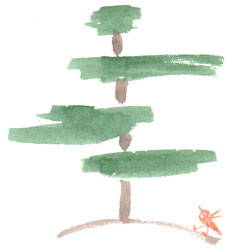
“If you’re looking for a job, go plant trees. You’ll probably find yourself digging in the dirt with a bank president or a business owner.”
I could barely contain myself!
The tendency of people looking for work is to overstate their features and understate their benefits.
It was so much in keeping with what I teach, and the way it was expressed was so stunning that I knew immediately I would have to share it.
“Go plant trees” is as good a slogan as I could hope for to encapsulate the basic tenets of the approach to finding work I advocate:
- Always connect as people first
- Drop the spiel and be real
- Make your work search as comfortable as possible
- Look for ways to be helpful
- Let go of the agenda—people can tell the difference
- Build community to assure a secure professional future
To prove her point, the panel’s tree-planting advocate then proceeded to explain how she had gotten her current job.
The owner of the company she now works for knew her from social and civic activities they had participated in together. She was hired without a formal interview because who she was and what she stood for was more important to the employer than what she’d done in the past.
FEATURES AND BENEFITS
There was a lot of good advice at the career event about knowing and articulating your selling points, and as I compared it with the advice of the woman who said to go plant trees, I realized that two contrasting aspects of self-marketing were being discussed.
It’s like the classic marketing distinction between features and benefits.
A feature describes what a product is made of, its contents as listed on the label. I’m on vacation, traveling in the South, and I see a bag of grits in a specialty food shop. The package tells me it’s made from “cracked corn, stone ground by a time honored process.” This is a physical characteristic of what’s being sold.
A benefit, on the other hand, is about how I experience the product. When I purchase that 2 lb. bag of Charleston’s Favorite Stone Ground Grits what I’m buying is a chance to hold on to the memory of my stay in the South Carolina Low Country by reproducing in my own kitchen the best shrimp-and-grits I’ve ever tasted.
The capacity to effectively articulate both features and benefits is critical to any marketing campaign, and this is true whether the product is a bag of grits, or you, the work searcher.
But the tendency of people looking for work is to overstate their features and understate their benefits.
Remember the old Michelin ads with the baby playing inside the tire? They didn’t waste time talking about the quality of the rubber or the construction. They showed you why you’d spend more on tires.
Any time you have the opportunity to show people why you would be an excellent employee or consultant, you’re doing the same thing.
Which is why the “go plant trees” advice is so powerful.
Your resume tells a prospective employer about your “features,” i.e., your experience and your qualifications.
But it says little or nothing about your “benefits”—all the reasons it would be a pleasure to work with you.
In order for him to see that, you have to find some way for him to get to know you, about your whole life, your values, your commitment to your work, your family, your community.
What better way than by planting trees together, side by side?
Nothing replaces live, in-person interaction, with no agenda to interfere with building trust.







I loved this column–because it is so true and you have a way of picking up on these nuggets when they come along and putting them out in a readable and understandable way–connecting to important concepts! Thanks Andi
Dear Beverly
I started to read your column this morning and it was like a bolt of lightening struck me! I have been looking for work for almost a year now and keep coming back to the basic,I don’t know what I want to do yet?
I have been busy reflecting, writing and searching for the elusive meaning of me. Along the way I wrote down a list of who I think I am ,my benefits as you would call them. Not realizing how important they really were until I read your blog . I quickly went to my notes and read “my benefits” and at once felt a sense of calm and direction. This realization will now become my cornerstone for looking for work.
Once again thanks for your creative and effective insights to the world of work search.
Cathy
Beverly,
Great article. Once again, you’ve taken a topic that’s been around for a while–this time volunteering–and presented it from a different perspective. With clear examples, you illustrate the difference between features and benefits so that job hunters can understand the difference and apply it to themselves. There’s no better way to make our benefits visible (first to ourselves) than to do something you love. CC
Cannot help myself, you send more than advice. Having said that – so, what is the recipe for Shrimp & Grits?
@Barbara M Traynor,
There are dozens of S&G recipes, all different, but here’s a good one:
http://www.foodnetwork.com/recipes/bobby-flay/shrimp-and-grits-recipe/index.html